



Your e-commerce packaging strategy is silently draining your profit margins. Every oversized box, excessive void fill, and protective material adds up—turning packaging from a necessity into a significant cost center.
Here’s the reality: Businesses shipping 10,000 packages monthly can waste $3,000-$5,000 annually through inefficient packaging cost reduction practices. Meanwhile, 73% of customers check shipping options before buying, and 74% of shoppers actually care about sustainable packaging choices.
The good news? Right-sizing boxes alone can reduce shipping costs by 15-20% annually while simultaneously reducing environmental waste by 26-40%. Add strategic material selection and sustainable alternatives, and you’re looking at transformational savings.
In this comprehensive guide, we’ll show you exactly how to optimize e-commerce packaging for cost, protection, and sustainability in 2025. You’ll learn dimensional weight calculations that carriers won’t explain, discover protective materials that balance cost and performance, and implement strategies that major e-commerce brands already use.
Why E-Commerce Packaging Matters More Than Ever
E-commerce packaging isn’t just about protection—it’s now central to your profitability and brand reputation.
The Cost Factor: Packaging typically represents 10-15% of total fulfillment costs. For many businesses, it’s the second-largest expense after labor. Reducing unnecessary packaging by even 10% creates a sustainable competitive advantage.
The Customer Experience: Unboxing experience drives repeat purchases and social media sharing. Yet excessive packaging frustrates customers, leading to negative reviews and a poor brand perception.
The Environmental Reality: 74% of shoppers say sustainable e-commerce packaging influences their buying decisions. 56% are more likely to recommend brands using eco-friendly options. This isn’t niche anymore—it’s mainstream expectation.
The 2025 Shift: Major retailers committed to 100% recyclable or biodegradable packaging by 2025. Following industry leaders’ positions puts your brand ahead of regulatory curves.
The most successful e-commerce companies treat packaging as a strategic investment, not a cost center.
Understanding Dimensional Weight: The Hidden Shipping Cost
Most e-commerce businesses don’t realize that carriers aren’t just charging for weight—they’re charging for space.
What is Dimensional Weight?
Dimensional weight (or DIM weight) is a pricing method in which shipping carriers calculate fees based on the volume a package occupies rather than its actual weight.
Here’s why this matters: A lightweight item that’s bulky (like pillows or foam) might have a dimensional weight 5-10 times higher than its actual weight. Carriers charge based on whichever is GREATER: actual weight or dimensional weight.
How Dimensional Weight is Calculated
The dimensional weight formula is straightforward:
Length (inches) × Width (inches) × Height (inches) ÷ DIM Divisor = DIM Weight
DIM Divisors by Carrier:
- FedEx: 139 cubic inches per pound
- UPS: 139 cubic inches per pound
- USPS: 166 cubic inches per pound
Real-World Example
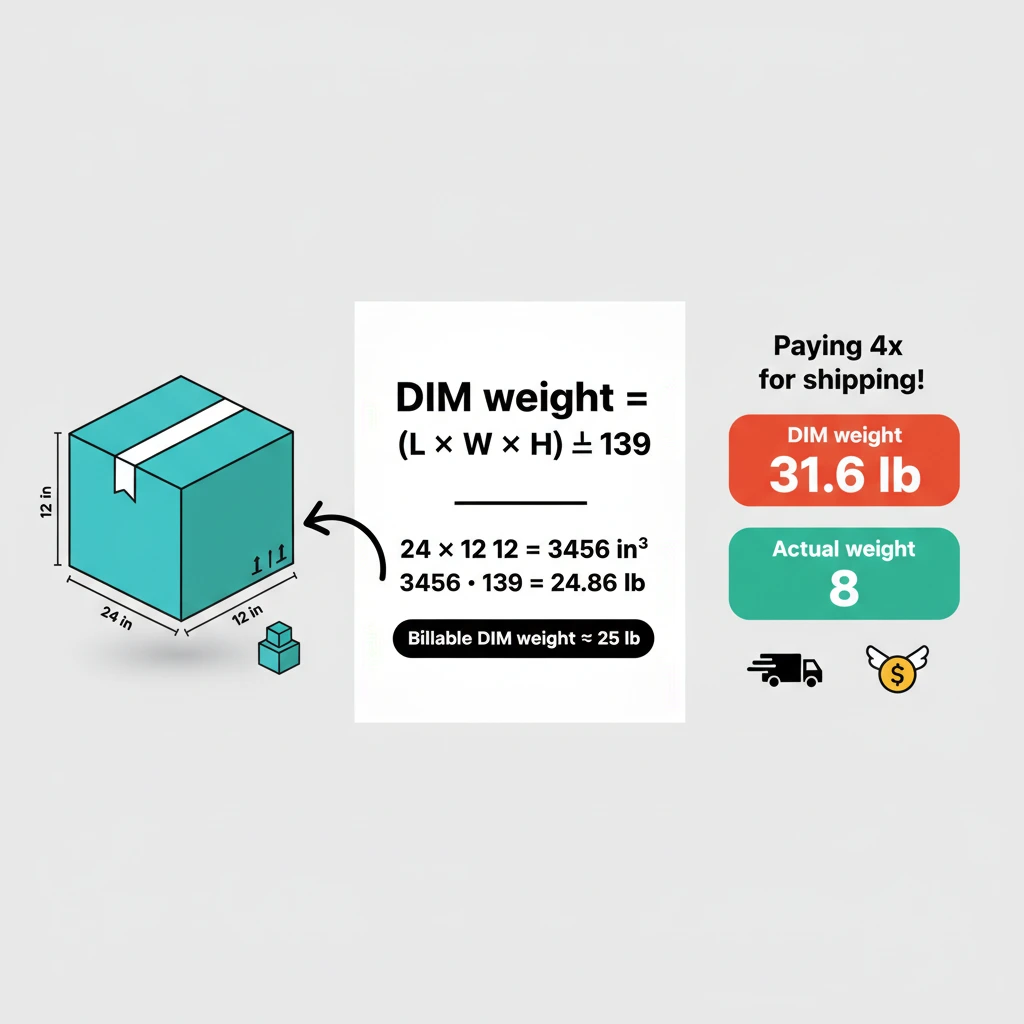
A package measuring 24″ × 12″ × 12″ with an actual weight of 8 pounds:
FedEx/UPS Calculation:
- (24 × 12 × 12) ÷ 139 = 31.6 pounds dimensional weight
- Actual weight: 8 pounds
- Billable weight: 31.6 pounds (the higher number)
- You’re paying shipping for 31.6 pounds despite an actual 8-pound item
This scenario—charging 4x the actual weight—isn’t rare. It’s common.
The Impact on Your Business
Oversized boxes directly translate to higher shipping fees:
- 10,000 monthly packages
- Average overage due to DIM pricing: 5 pounds per package
- Average rate: $0.15 per pound
- Monthly loss: $7,500 | Annual loss: $90,000
This is why right-sizing boxes isn’t a nice-to-have—it’s essential financial management.
The Right-Sizing Revolution: Cut Costs 15-20% Immediately
Right-sizing boxes is the single most impactful e-commerce packaging optimization. It’s not just about using smaller boxes—it’s about strategic precision.
What is Right-Sizing?
Right-sizing means selecting the smallest appropriate box that safely accommodates your product with necessary cushioning space (typically 2 inches on all sides for void fill).
Real-World Impact
Studies show right-sizing delivers:
| Metric | Impact |
| Packaging Material Reduction | 26-40% less cardboard |
| Shipping Cost Savings | 15-20% reduction |
| Pallet Space Efficiency | 25% more boxes per pallet |
| Warehouse Space | 10-15% reduction needed |
| Packing Labor Time | 10-20% faster |
| Environmental Impact | Equivalent to removing 1 in 4 delivery trucks |
Right-Sizing Strategy: Step-by-Step
Step 1: Measure Your Products Precisely
- Use actual product dimensions, not rounded estimates
- Account for product packaging (boxes, protective wrap)
- Measure the heaviest/bulkiest items you ship
Step 2: Determine Box Requirements
- Add 2 inches in height for cushioning material
- Allow 0.5 inches of side clearance for secure packing
- Ensure void fill won’t compress the product
Step 3: Select Standard Sizes When Possible
- Use carrier-optimized box dimensions
- Standard sizes have bulk pricing advantages
- Reduces inventory complexity
Step 4: Calculate Dimensional Weight Impact
- Use the DIM weight formula for your chosen boxes
- Compare DIM weight vs. actual product weight
- Ensure the box doesn’t create a DIM weight premium
Step 5: Test and Validate
- Pack sample products and drop-test
- Confirm protection during transit
- Monitor return rates for damage
Real Cost Calculation Example
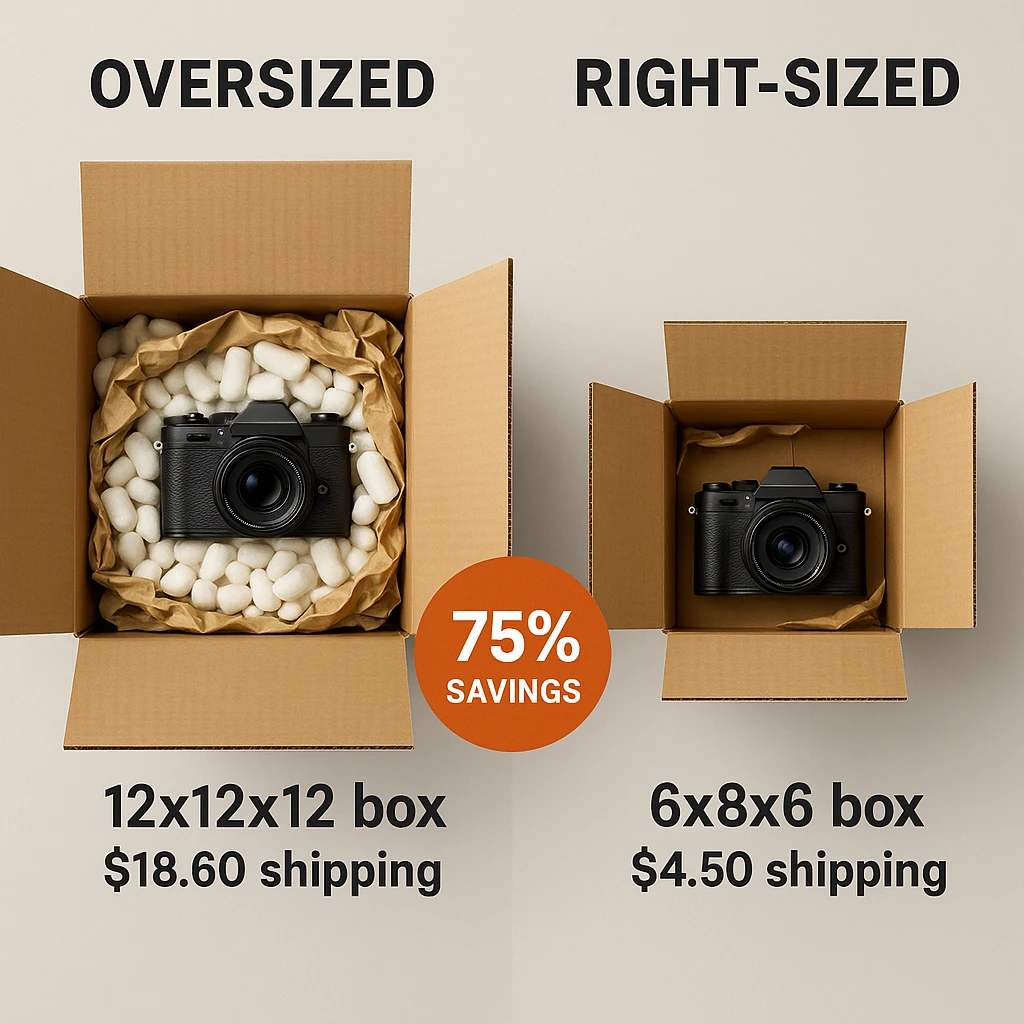
Product: Tech accessories averaging 3 lbs, currently shipped in 12″×12″×12″ box
Current (Oversized Box):
- Dimensions: 12×12×12 = 1,728 cubic inches
- DIM weight: 1,728 ÷ 139 = 12.4 lbs
- Billable weight: 12.4 lbs (vs. 3 lbs actual)
- 10,000 monthly units: 12.4 lbs × 10,000 × $0.15 = $18,600/month
After Right-Sizing to 6″×6″×8″ box:
- Dimensions: 6×6×8 = 288 cubic inches
- DIM weight: 288 ÷ 139 = 2.07 lbs
- Billable weight: 3 lbs (actual weight is higher)
- 10,000 monthly units: 3 lbs × 10,000 × $0.15 = $4,500/month
- Annual savings: $168,000
Plus: Reduced void fill, faster packing, and smaller boxes use less cardboard.
Selecting Protective Packaging Materials
Choosing the correct protective packaging materials balances product safety with cost and sustainability.
Bubble Wrap: The Classic Choice
Bubble Wrap remains the most popular protective material for direct product wrapping.
Best For:
- Individual fragile items (glassware, electronics)
- Direct wrapping around products
- Shock absorption and cushioning
Advantages:
- Superior shock absorption
- Flexible for irregular shapes
- Available in various bubble sizes
- Cost-effective for direct wrapping
Disadvantages:
- Takes significant storage space
- Manual wrapping labor-intensive
- Pre-inflated (can’t compress for shipping)
- Higher cost per void volume
Air Pillows: Cost-Effective Void Filling
Air Pillows are on-demand inflatable cushioning for void spaces, not direct product wrapping.
Best For:
- Filling large empty spaces in boxes
- High-volume operations with machines
- Lightweight void fill needs
Advantages:
- Lowest cost per volume (typically $0.02-$0.08 per pillow)
- On-demand inflation reduces storage
- Rapid automated filling
- Lightweight reduces shipping weight
Disadvantages:
- Requires machine investment ($1,000-$3,000)
- Maintenance and service costs
- Not suitable for direct fragile item wrapping
- Requires operator training
Kraft Paper: Sustainable Alternative
Kraft Paper and honeycomb paper are eco-friendly void-filling options replacing plastic alternatives.
Best For:
- Environmentally-conscious businesses
- Brands targeting eco-conscious customers
- Void filling and product wrapping
Advantages:
- 100% recyclable and biodegradable
- Compostable in home and commercial systems
- Sustainable brand positioning
- Lower environmental impact
Disadvantages:
- Slightly higher cost than plastic options
- Less consistent protection than bubble wrap
- Manual application requires training
- Not ideal for very fragile items
Molded Pulp: Styrofoam Alternative
Molded Pulp uses recycled paper to create custom protective shapes, replacing Styrofoam.
Best For:
- Fragile electronics needing custom protection
- Eco-friendly luxury brands
- Standard product types (allows custom molds)
Advantages:
- Excellent protection comparable to Styrofoam
- 100% recyclable and biodegradable
- Custom shapes possible
- Significant environmental impact reduction
Disadvantages:
- Higher upfront tooling costs
- Longer lead times for custom molds
- Heavier than Styrofoam (shipping cost impact)
- Less flexible for product variations
Material Comparison for Your Decision
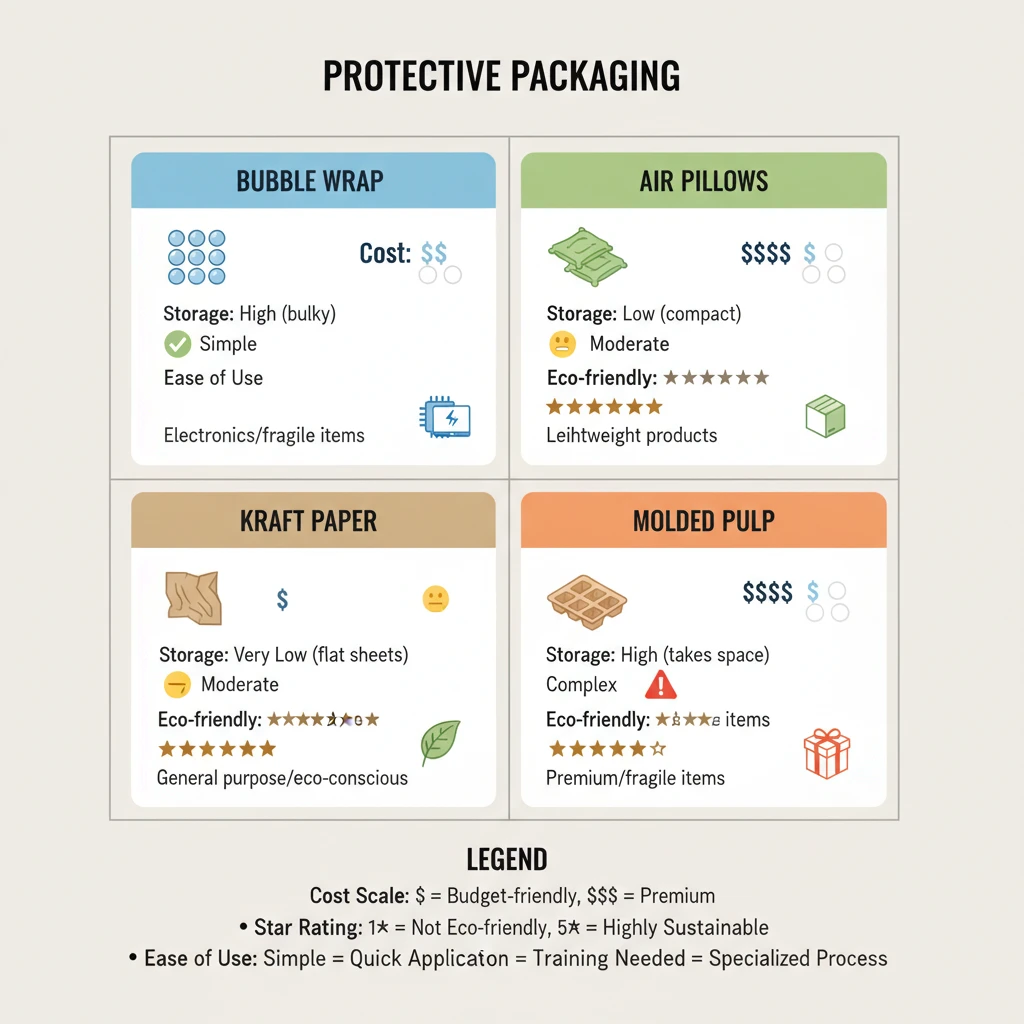
| Material | Cost | Storage | Ease of Use | Eco-Friendly | Best Application |
| Bubble Wrap | Medium | High space | Easy manual | Recyclable | Direct wrapping of fragile items |
| Air Pillows | Low | Minimal | Machine dependent | Recyclable | Large void filling |
| Kraft Paper | Medium-High | Low | Easy manual | Biodegradable | Sustainable void filling |
| Molded Pulp | High | Medium | Standardized | Biodegradable | Custom fragile protection |
Sustainable E-Commerce Packaging: Cost and Conscience
Sustainable e-commerce packaging isn’t just environmentally responsible—it’s increasingly cost-competitive.
The Business Case for Going Green
Consumer Impact:
- 74% of shoppers are influenced by sustainable packaging
- 56% more likely to recommend eco-conscious brands
- Higher repeat purchase rates (12-18% increase observed)
- Willingness to pay a premium (5-10%) for eco-brands
Cost Impact:
- Recycled materials often cost LESS than virgin materials
- Reduced waste decreases disposal costs
- Energy consumption is lower for recycled processing
- Bulk eco-packaging is often discounted
Sustainable Material Options
Recycled Cardboard Boxes:
- 100% recycled content available
- Same strength as virgin cardboard
- Often cheaper than virgin options
- Curbside recyclable
Biodegradable Mailers:
- Compostable poly mailers (PHA-based)
- Break down 90-180 days vs. 500+ years for traditional plastic
- Slightly higher cost ($0.03-$0.08 per unit premium)
- Strong value positioning
Eco-Friendly Void Fill:
- Biodegradable air pillows
- Paper-based cushioning alternatives
- Recycled paper shreds
- Mushroom-based protective packaging (emerging)
Reusable Packaging Systems:
- Durable boxes used 20+ times
- Return-based models with cleaning/refurbishment
- Reduces per-shipment cost significantly over time
- Strong brand positioning
2025 Packaging Trends: Leading the Market
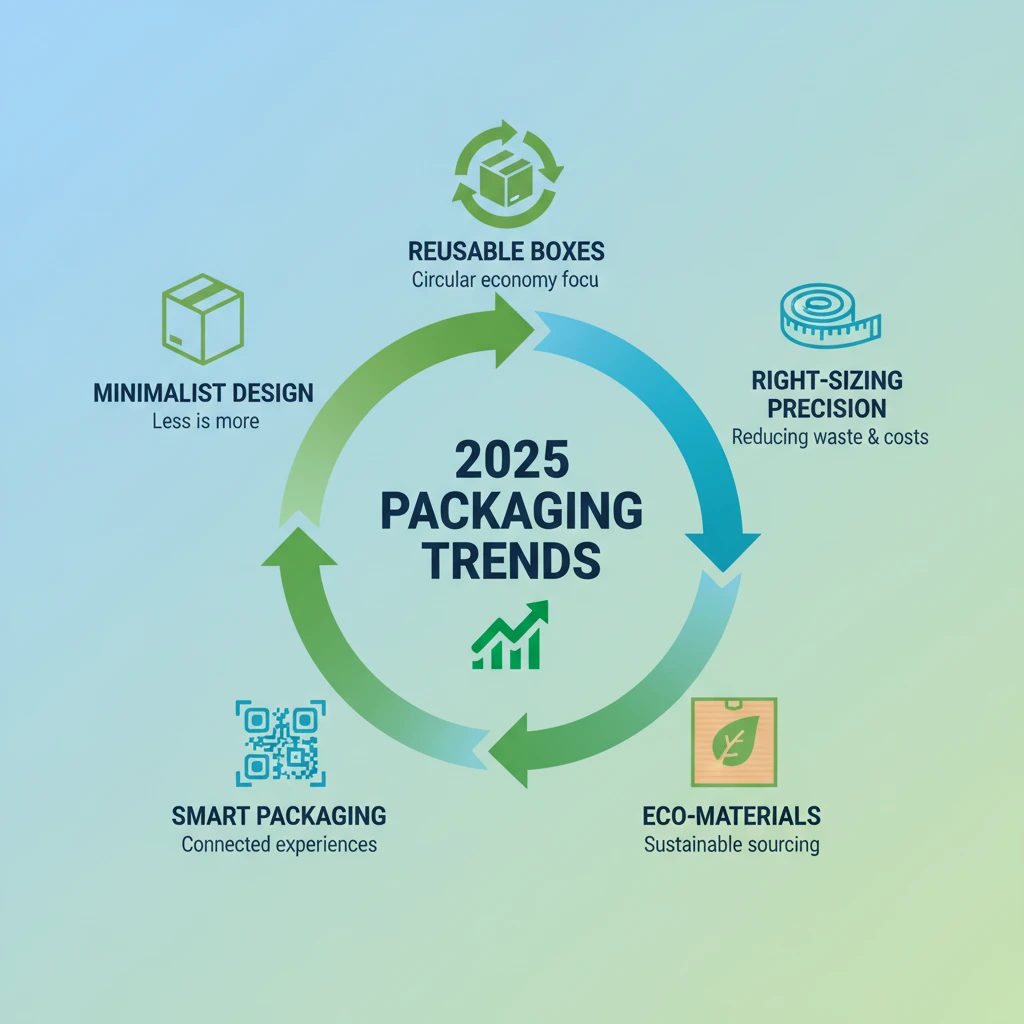
Minimalist Approach: Eliminating unnecessary packaging components, reducing ink usage, and removing plastic coatings that complicate recycling.
Personalization at Scale: Digital printing enables customer names and location-specific messages at a minimal cost premium.
Smart Packaging Integration: QR codes and NFC tags embedded in packaging for interactive customer experiences.
Right-Sizing Precision: Advanced algorithms and 3D scanning for perfectly-sized boxes on every order.
8-Step E-Commerce Packaging Optimization Strategy
Step 1: Audit Current Packaging Practices
Analyze your existing approach:
- Average box dimensions vs. product dimensions
- Current protective materials and quantities
- Damage rates and return reasons
- Customer feedback on packaging
Step 2: Segment Products by Type
Group products requiring different e-commerce packaging approaches:
- Fragile items (electronics, glassware)
- Semi-fragile (books, clothing with glass components)
- Durable goods (hardcover books, toys)
- Soft goods (clothing, textiles)
Step 3: Implement Right-Sizing
For each product type:
- Measure accurately
- Select appropriately-sized boxes
- Calculate the dimensional weight impact
- Test protection with sample shipments
Step 4: Select Protective Materials Strategically
Match materials to product protection needs:
- Use bubble wrap for individual fragile items
- Deploy air pillows for void filling in large boxes
- Consider sustainable alternatives
- Balance cost with protection requirements
Step 5: Establish Packing Standards
Create documented procedures for consistency:
- Minimum cushioning requirements (2 inches)
- Material application methods
- Weight distribution guidelines
- Quality checks before shipment
Step 6: Negotiate Supplier Agreements
Work with packaging suppliers:
- Request volume discounts
- Explore bulk purchasing during off-peak seasons
- Negotiate flexible minimum order quantities
- Consider long-term contracts for better rates
Step 7: Calculate ROI and Track Savings
Monitor key metrics:
- Packaging cost per unit (track monthly)
- Shipping cost per unit (compare carriers)
- Damage/return rates by product type
- Customer satisfaction scores
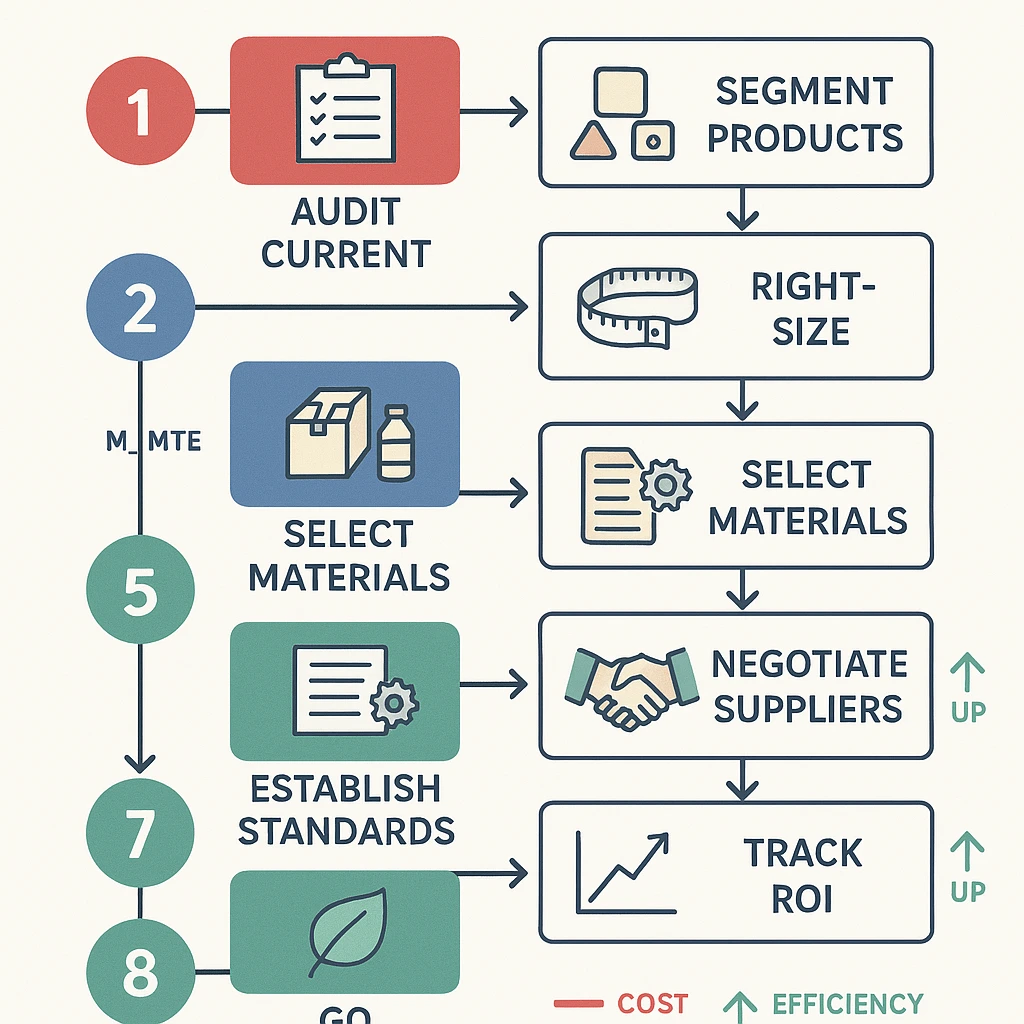
Step 8: Evolve Toward Sustainable Options
Gradually transition to eco-friendly materials:
- Start with low-volume product categories
- Test customer response
- Scale sustainable options as margins improve
- Communicate sustainability to customers
Common E-Commerce Packaging Mistakes
Mistake #1: One-Size-Fits-All Boxes
The Problem: Using a single box size for all products results in massive dimensional-weight premiums and excess void fill.
The Solution: Segment products by type and right-size each category. Even 3-4 standard sizes dramatically reduce costs.
Mistake #2: Excessive Void Fill
The Problem: Overfilling boxes with protective materials unnecessarily adds weight and cost.
The Solution: Use minimum effective cushioning (typically 2 inches) and prioritize product fit over maximum safety margin.
Mistake #3: Not Calculating Dimensional Weight
The Problem: Builders unaware of DIM weight charges often select oversized boxes, unknowingly paying 2-5x the expected shipping cost.
The Solution: Use the DIM weight formula for all box selections; compare the DIM weight to the actual weight.
Mistake #4: Ignoring Customer Sustainability Expectations
The Problem: Many businesses still use excessive plastic and non-recyclable materials, damaging brand perception.
The Solution: Audit materials for recyclability/biodegradability; communicate sustainable choices to customers.
Mistake #5: Not Standardizing Packing Procedures
The Problem: Inconsistent packing leads to damage, returns, inconsistent shipping costs, and labor inefficiency.
The Solution: Document standard procedures; train staff; implement quality checks; monitor compliance.
Anchor Box Solutions for E-Commerce Optimization
Anchor Box specializes in the e-commerce packaging materials you need for cost-effective, sustainable shipping.
Right-Sizing Support: Our team helps calculate optimal box dimensions for your products, factoring in dimensional weight to ensure you’re never overpaying shipping fees.
Flexible Quantities: No minimum pick-up policy means you can purchase precisely what you need when you need it—perfect for seasonal demand fluctuations or testing new packaging strategies.
Sustainable Options: We stock recycled corrugated boxes, eco-friendly void fill (kraft paper, air pillows), and biodegradable mailers—enabling your sustainable e-commerce packaging transition.
Material Selection Guidance: Our Houston-based team helps match protective materials to product types, balancing protection, cost, and environmental impact.
Fast Local Delivery: Based in Houston, TX, we ensure you receive packaging supplies quickly without long lead times—critical for e-commerce operations.
FAQs
How do I calculate dimensional weight, and does it really affect my shipping costs?
Dimensional weight (DIM) = Length × Width × Height ÷ Carrier’s DIM Divisor (139 for FedEx/UPS, 166 for USPS). Yes, it significantly affects costs—carriers charge whichever is higher: actual weight or DIM weight. A 3-pound item in a 12″×12″×12″ box might have 12.4 pounds DIM weight, making you pay 4x for shipping. This is precisely why right-sizing is critical for profitability.
What’s the real cost savings from right-sizing my boxes?
Right-sizing typically saves 15-20% on shipping costs annually, reduces packaging materials by 26-40%, and cuts warehouse space by 10-15%. A business shipping 10,000 monthly packages averaging $0.50/package premium from oversized boxes saves $60,000 annually just through proper sizing—plus reduced labor time and environmental benefits.
Should I use bubble wrap, air pillows, or kraft paper for void filling?
It depends on your needs. Bubble wrap is best for wrapping fragile items. Air pillows excel at cost-effective void filling in large boxes when you have volume. Kraft paper offers sustainable void filling without the need for machinery investment. Most businesses use a combination: bubble wrap for individual protection, air pillows or kraft paper for box voids.
Can eco-friendly packaging protect products as well as traditional materials?
Yes—modern sustainable e-commerce packaging, such as honeycomb kraft paper and molded pulp, provides protection comparable to that of plastic alternatives. Recycled cardboard boxes meet the same strength standards as virgin cardboard. The key is matching material to protection needs, not assuming eco-friendly means weaker protection.
What’s the best way to transition to sustainable packaging without disrupting operations?
Start with one low-volume product category to test eco-materials and customer response. Gradually scale sustainable options as margins improve and supply chains stabilize. Communicate sustainability efforts to customers through packaging inserts and social media. Most businesses find that the transition actually improves margins through lighter materials and reduced material costs.
Conclusion: Packaging Optimization as Competitive Advantage
E-commerce packaging optimization isn’t a one-time project—it’s an ongoing strategic initiative. Companies that master right-sizing, protective material selection, and sustainable practices see:
✓ 15-20% shipping cost reductions
✓ 26-40% packaging material savings
✓ Improved customer satisfaction and repeat rates
✓ Enhanced brand reputation through sustainability
✓ Reduced environmental impact
✓ Faster packing and improved efficiency
The best time to audit your e-commerce packaging strategy was yesterday. The next best time is today.
Start with your five highest-volume products. Right-size boxes, calculate actual savings, and build momentum. Your profit margins will thank you.
For e-commerce packaging guidance specific to your products, Anchor Box offers free consultations with packaging specialists. We help you select the right-sized boxes, protective materials that match your needs, and sustainable options that align with your brand values—no minimum orders, fast Houston-area delivery, and pricing that supports your bottom line.