


When you ship products regularly, packaging costs add up fast. Bulk shipping box orders is one of the fastest ways to reduce your per-unit costs and boost profitability.
Most business owners struggle with three critical questions:
- How much should I order at once?
- What discounts can I actually get?
- How do I manage warehouse space from a large order without overflowing my storage?
This guide answers all three questions with real numbers, practical strategies, and actionable steps. By the end, you’ll understand precisely how to leverage bulk ordering to save 30-50% on packaging costs. Plus, we’ll show you why choosing a flexible supplier like Anchor Box (with no minimum order requirements) changes everything for growing businesses.
WHY BULK ORDERING MATTERS FOR YOUR BUSINESS MARGINS
The Hidden Cost of Getting It Wrong
Most business owners don’t realize that up to 25% of e-commerce packages are nearly twice the size they need to be.
When you ship in an oversized box, multiple problems compound:
- Shipping costs increase due to dimensional weight pricing
- Packing materials cost more (bubble wrap, peanuts, void fill)
- Warehouse storage space decreases because larger boxes take up more room
- Product damage risk increases when items shift in oversized boxes
- Environmental impact grows with more packaging per shipment
A business shipping 10,000 units annually with average oversizing could waste $2,500 to $5,000 in unnecessary shipping costs. That’s before counting damage claims or material waste.

Why Bulk Ordering Saves Money
The key insight: Packaging suppliers have fixed costs. Whether they produce 100 boxes or 10,000 boxes, they must:
- Set up equipment and calibrate machinery
- Source raw corrugated materials
- Run quality control procedures
- Package and prepare for shipment
These fixed costs are spread across fewer units on small orders (making each box more expensive), but across many units on large orders (making each box cheaper).
Here’s the real impact:
Fixed costs on a 100-unit order = roughly $0.50 per box
Fixed costs on a 5,000-unit order = roughly $0.03 per box
Fixed costs on a 10,000-unit order = roughly $0.01 per box
Beyond fixed costs, suppliers negotiate better material pricing from their own suppliers when buying in bulk. These savings get passed to customers who commit to larger orders.
That’s why bulk ordering creates such dramatic cost reductions.
UNDERSTANDING TIERED PRICING AND DISCOUNT STRUCTURES
How Tiered Pricing Works
Most packaging suppliers use tiered pricing models. Different price points unlock at different order quantities.
Here’s what a typical tiered pricing structure looks like:
100-250 boxes: $1.50 per unit (baseline)
251-500 boxes: $1.35 per unit (10% discount)
501-1,000 boxes: $1.20 per unit (20% discount)
1,001-2,500 boxes: $0.95 per unit (36% discount)
2,501-5,000 boxes: $0.75 per unit (50% discount)
5,001-10,000 boxes: $0.60 per unit (60% discount)
10,000+ boxes: custom pricing (60%+ discount plus negotiation)
Notice the dramatic price drops. The jump from 250 to 501 boxes brings 10% savings. The jump from 2,500 to 5,000 boxes brings an additional 20% reduction.
This is why volume discounts are so powerful for growing businesses. Each tier unlock brings meaningful savings.
Calculating Your Shipping Box Costs Savings
Let’s look at a real example:
Small Order Cost:
- 500 boxes × $1.50 per box = $750
Large Order Cost:
- 5,000 boxes × $0.75 per box = $3,750
Per Box Comparison:
- Small order: $1.50 per box
- Large order: $0.75 per box
- Savings per box: $0.75 (50% reduction)
Now multiply this across annual volume:
If you ship 20,000 units per year using 500-box orders:
- Annual cost = $3,000 (from multiple small orders)
- Cost per unit = $0.15
If you ship 20,000 units per year using 5,000-box bulk ordering:
- Annual cost = $1,500 (ordered 4 times)
- Cost per unit = $0.075
Your savings: $1,500 annually, just from better bulk box pricing.
Different Suppliers, Different Structures
Not all suppliers use identical discount structures. Some charge based on:
- Total annual volume (not single-order size)
- Percentage-based discounts
- Flat rates within specific ranges
- Combination pricing models
The key: Always ask suppliers for complete pricing sheets showing costs at:
- 250 boxes
- 500 boxes
- 1,000 boxes
- 2,000 boxes
- 5,000 boxes
This gives you the complete picture of their tiered pricing model.
At Anchor Box, we offer flexible bulk ordering options without forcing you into high minimums. You can test different quantities and find the perfect order size for your business without a massive upfront investment.
NO MINIMUM ORDER REQUIREMENTS – A GAME-CHANGER
What Are Minimum Orders and Why They’re a Problem?
A minimum order quantity (MOQ) is the smallest quantity a supplier will accept. Traditional packaging suppliers often set MOQs at:
- 500 units minimum
- 1,000 units minimum
- 2,000 units minimum (or higher)
For small businesses, these high minimums create real barriers:
- Cash flow constraints: A 1,000-box minimum at $1 per box ties up $1,000 immediately
- Storage space limitations: 1,000 boxes occupy roughly 50 cubic feet of warehouse space
- Risk of waste: What if your product stops selling or needs to be changed? You’re stuck with thousands of unusable boxes
- Testing friction: Want to try a different box size? Most suppliers won’t let you with small quantities
- Emergency orders: Missing the reorder deadline? You pay premium pricing for rush orders
Why Anchor Box Eliminated High Minimums
Progressive suppliers recognize that small businesses need flexibility. Anchor Box has eliminated high minimum order requirements specifically because:
- We believe growing businesses shouldn’t be locked into massive orders
- We know that startups and small shops often become large accounts over time
- We’ve streamlined our processes to handle diverse order sizes efficiently
- We focus on serving small to medium businesses, not just enterprise accounts
The No Minimum Advantage Changes Everything
Consider two real-world scenarios for a startup shipping 50 units weekly:
With Traditional Minimums (1,000-box MOQ):
- Week 1-5: Order 1,000 boxes at $1.00 per box = $1,000 upfront investment
- You use only 250 boxes (weeks 1-5), leaving 750 boxes in storage
- These boxes occupy valuable warehouse real estate for months
- If your product changes or improves, you’re stuck with excess inventory
- Upgrade to different box specifications? Start over with another 1,000-box order
Without High Minimums (Flexible Ordering from Anchor Box):
- Week 1-5: Order 250 boxes at $1.10 per box = $275 total investment
- Only storing what you need, conserving warehouse space
- Week 6-10: Order another 250 boxes (or negotiate better pricing for repeat volume)
- Flexibility to adjust box sizes, dimensions, or specifications based on feedback
- Test new packaging without waste or risk
The flexible supplier costs 10% more per box initially, but saves money overall through:
- Lower upfront investment
- Reduced inventory carrying costs
- Operational flexibility
- Ability to upgrade packaging as your business grows
This is why Anchor Box’s no minimum policy is a game-changer for growing businesses.
BULK ORDERING STRATEGIES THAT ACTUALLY WORK
The 80/20 Box Strategy: Maximum Savings with Minimal Complexity
Most e-commerce businesses find that 80-90% of their products fit within just 2-3 standard box sizes. This is your key to maximum savings on bulk orders.
Example Product Lineup:
- Lightweight items (mugs, accessories, clothing): 10x8x6 inches (70% of shipments)
- Medium items (shoes, electronics, home goods): 16x12x8 inches (20% of shipments)
- Heavy items (bulk orders, large appliances): 20x15x15 inches (10% of shipments)
Strategic Approach:
- Order your most-used size in massive quantities (5,000-10,000 units) to maximize discount structures
- Order secondary sizes in moderate quantities (1,000-2,000 units each)
- Order tertiary sizes in smaller quantities as needed
- This maximizes savings on your highest-volume box while maintaining a manageable inventory
Cost Impact of the 80/20 Strategy:
Most-used size (70% of shipments): $0.60 per box (bulk ordering at 10,000 units)
Secondary size (20% of shipments): $0.85 per box (bulk ordering at 2,000 units)
Tertiary size (10% of shipments): $0.95 per box (bulk ordering at 1,000 units)
Weighted average cost per box: $0.71 (vs. $1.50 if ordering small quantities)
That’s a 53% cost reduction through strategic bulk ordering.
Break-Even Analysis for Bulk Order Decisions
Before committing to a large bulk shipping box order, calculate your break-even point. This tells you exactly when savings outweigh upfront investment and carrying costs.
Simple Break-Even Formula:
(Price difference per box) × (Number of boxes) = Break-even usage point
Example Calculation:
Small order cost: $1.50 per box
Large bulk order cost (1,000 units): $1.00 per box
Price difference: $0.50 per box
Break-even point = $0.50 × 1,000 = 500 boxes needed
This means you need to use 500 of those 1,000 boxes to break even.
If you use 500 boxes per month:
- Break even in month 1
- Save $500 per month from month 2 forward
If you use 100 boxes per month (slower business):
- Break even in month 5
- Savings make sense if you’ll use all the boxes within 5 months
Quick checklist:
- Will you use at least 50% of this bulk order within 3 months?
- Does your product demand support this volume forecast?
- Do you have warehouse space to store these boxes?
- Can you manage cash flow for the upfront investment?
If you answered “yes” to all four, bulk ordering at this tier makes financial sense.
Seasonal Ordering Strategy for Fluctuating Demand
Smart bulk ordering accounts for seasonal variations.
Spring/Summer (High Volume Period):
- Order larger quantities of primary box sizes
- Take advantage of supplier capacity before peak demand
- Lock in current pricing before potential rate increases
- Example: Order 10,000 units of your most-used size in March
- This ensures you won’t face stock-outs during peak season
Fall/Winter (Variable Demand Period):
- Order moderate quantities of secondary sizes
- Assess current inventory levels before committing
- Adjust order quantities based on actual sales trends
- Example: Order 2,000 units of secondary box sizes in September
This strategy maintains cost savings while adapting to demand fluctuations.
With Anchor Box, seasonal adjustments are easy because there are no minimum order requirements. Order what you need, when you need it, without being locked into rigid minimums.
HOW BULK ORDERING REDUCES YOUR TOTAL PACKAGING COSTS
The Full Cost Picture: It’s More Than Just Box Price
Bulk ordering impacts your entire packaging cost structure, not just the box unit price.
Direct Costs Reduced by Bulk Ordering:
- Box unit price: 30-50% reduction through tiered pricing and volume discounts
- Setup fees: 70-80% reduction because amortized across larger order
- Printing costs (if customized): 20-40% reduction through economies of scale
Indirect Costs Reduced by Bulk Ordering:
- Ordering frequency: Fewer orders = less administrative time and communication
- Shipping from supplier: Larger shipments qualify for better freight rates
- Quality consistency: Larger production runs maintain consistent box quality
- Supplier relationships: Predictable orders = better pricing and priority service
Complete Shipping Box Costs Comparison: Small Business vs. Bulk Business
Small Business Model (Monthly orders, 200-250 boxes):
Box cost: $1.50 per unit × 250 = $375
Setup fees: $50 per order × 12 months = $600 annually
Printing (if applicable): $100 per order × 12 = $1,200 annually
Administrative time: 2 hours × $25/hour × 12 = $600 annually
Total annual cost for 3,000 boxes: $2,775
Cost per box: $0.925
Bulk Business Model (Quarterly orders, 2,500 boxes):
Box cost: $0.95 per unit × 10,000 annual = $9,500
Setup fees: $30 per order × 4 = $120 annually
Printing (if applicable): $60 per order × 4 = $240 annually
Administrative time: 1 hour × $25/hour × 4 = $100 annually
Total annual cost for 10,000 boxes: $9,960
Cost per box: $0.996
The difference:
Small business shipping 3,000 boxes: $0.925 per box
Bulk business shipping 10,000 boxes: $0.996 per box initially
On the surface, bulk pricing looks only slightly better. But here’s the real advantage:
As your bulk ordering volume grows (to 15,000 or 20,000 boxes annually), suppliers drop prices further. The bulk business can negotiate down to $0.70- $0.80 per box as order volumes increase.
The savings compound over time.
Material Waste Reduction Through Standardization
Bulk ordering forces you to standardize box sizes across your product line. Standardization reduces waste of void fill material by 20-30%.
Example Calculation:
Using 5 different box sizes:
- Average void fill per box: 40%
- Void fill materials cost: $0.10-$0.20 per box
- Annual cost on 10,000 boxes: $400-$800
Using two optimized box sizes:
- Average void fill per box: 20%
- Void fill materials cost: $0.10-$0.20 per box
- Annual cost on 10,000 boxes: $200-$400
Savings from standardization: $200- $400 annually in void fill alone.
Add in the benefits of:
- Reduced packing labor (standardized procedures are faster)
- Less space wasted on multiple box types
- Simpler inventory management
- Faster, more consistent order fulfillment
INVENTORY MANAGEMENT FOR BULK ORDERS
Storage Space Solutions: Making Bulk Boxes Fit Your Warehouse
The biggest challenge with bulk shipping box orders isn’t cost—it’s storage.
Standard corrugated boxes measure roughly 18×12×8 inches when assembled. One box occupies about 0.75 cubic feet. Here’s the space math:
- 1,000 assembled boxes = 750 cubic feet of space
- 5,000 assembled boxes = 3,750 cubic feet of space
- 10,000 assembled boxes = 7,500 cubic feet of space
Most bulk orders of 1,000-5,000 boxes fit within a standard 10×10 storage room or warehouse section.
Smart Storage Solutions:
- Vertical stacking: Store boxes vertically in columns to maximize height usage
- Shelving systems: Install simple shelving (4-5 levels) to increase storage density dramatically
- Pallet racking: For huge orders (5,000+ boxes), pallet racking is cost-effective and space-efficient
- Flat-packed storage: Request flat-packed (unassembled) boxes from Anchor Box to reduce footprint by 50%
- Compact storage: Clear nearby shelf space before order arrival and plan the exact storage location
Maximum Height Stacking:
Standard corrugated boxes safely stack to 8-10 feet high. Use vertical space most businesses ignore:
- Stack boxes in columns reaching ceiling height
- Use every inch of wall space with wall-mounted shelving
- Install mezzanines if you need to double your storage capacity
- Organize by product type for fast access
FIFO Inventory Management: First In, First Out
FIFO (First In, First Out) ensures older stock is used before newer stock, preventing obsolescence.
Implementation for Shipping Boxes:
- When your bulk order arrives, place it at the back of your storage area
- Keep previous boxes at the front, using them first
- When the previous stock depletes, move the newer bulk order forward
- This rotation ensures boxes are used in chronological order
FIFO prevents:
- Boxes ordered 8 months ago are still sitting, while newer boxes are used
- Quality degradation in older boxes is compromising shipments
- Wasted inventory from boxes that become obsolete
Demand Forecasting for Smart Bulk Ordering
Before placing a large bulk shipping box order, forecast your demand over the next 6-12 months. This guides your order quantity.
Simple Forecasting Method:
Step 1: Review the past 3 months of shipping volume
Step 2: Calculate average weekly shipments
Step 3: Project to annual volume
Step 4: Add a 15-20% buffer for growth
Example Calculation:
Month 1: 300 shipments
Month 2: 320 shipments
Month 3: 340 shipments
Average monthly: 320 shipments
Annual projection: 320 × 12 = 3,840 shipments
Add 15% growth buffer: 3,840 × 1.15 = 4,416 boxes needed.
Recommended order: 5,000 boxes (hits bulk tiered pricing tier)
Inventory Tracking Software: Know What You Have
To make bulk ordering work efficiently, invest in basic inventory-tracking systems. Even simple spreadsheets beat manual counts.
Essential Tracking Features:
- Real-time stock level visibility
- Automated reorder alerts when inventory hits the minimum threshold
- Historical usage data to improve future forecasting
- Integration with shipping software to automatically pull inventory data
- Barcode scanning for accuracy
Popular Options:
- Simple Excel/Google Sheets spreadsheet (free, effective)
- Square Inventory (free basic version)
- Cin7 (mid-range pricing, excellent features)
- NetSuite (enterprise solution)
Reorder Point Formula:
Reorder point = (Average daily usage) × (Lead time in days) + Safety stock
Example:
If you use 100 boxes daily and your supplier needs 14 days to deliver:
- Reorder point = (100) × (14) + 200 (safety buffer) = 1,600 boxes
- Order new inventory when you hit 1,600 boxes remaining
This prevents both stock-outs and excess inventory.
NEGOTIATING THE BEST BULK ORDERING PRICING
Getting Quotes from Multiple Suppliers: Never Accept the First Price
Always price-shop across at least 3-5 packaging suppliers. Prices vary significantly.
What to Ask for When Requesting Quotes:
- Exact box specifications: dimensions, material type (single-wall, double-wall), printing requirements, color
- Tiered pricing at 250, 500, 1,000, 2,500, 5,000, and 10,000+ unit quantities
- Volume discounts beyond the listed tiers
- Lead times for each order size
- Set up fees and whether they apply per order or are one-time only
- Free samples (most suppliers provide these)
- No minimum order requirements or flexibility
Pro Tip: At Anchor Box, we provide detailed quotes at all volume levels and offer no minimum order requirements, so you can test different quantities before committing.
Compare Total Cost, Not Just Per-Unit Price
Never compare suppliers on per-box price alone. Calculate total cost.
Comparison Example:
Supplier A: $0.80 per box, 1,000 minimum, $100 setup fee, 2-week lead time
- Cost for 500 boxes: Can’t fulfill (minimum too high)
- Cost for 2,500 boxes: 2,500 × $0.80 + $100 = $2,100 total ($0.84 per box)
Supplier B: $0.90 per box, no minimum order, $30 setup fee, 3-week lead time
- Cost for 500 boxes: 500 × $0.90 + $30 = $480 total ($0.96 per box)
- Cost for 2,500 boxes: 2,500 × $0.90 + $30 = $2,280 total ($0.912 per box)
Supplier A offers better pricing at high volume, but can’t serve your immediate, smaller needs. Supplier B offers flexibility and reasonable pricing. Your choice depends on your business requirements.
With Anchor Box, you get competitive pricing AND flexibility—because we understand that growing businesses need both.
Negotiating Long-Term Relationships: How to Get Better Rates
After confirming you’re a reliable customer (3-6 consistent orders), you can negotiate better rates.
Effective Negotiation Points:
- Volume commitment: “We expect to ship 15,000 boxes this year. If we guarantee this volume with you, what pricing can you offer?”
- Frequency and predictability: “We place an order on the 1st of each month. This predictability should be worth a better rate.”
- Payment terms: “We pay invoices within 5 days of receipt. Will you offer 2% discount for early payment?”
- Expanded product range: “We’re considering custom-printed boxes next quarter. If we commit your printing services for all boxes, what bulk rate applies?”
- Longer-term commitment: “We’ve been with you for 6 months and we’re satisfied. Can we lock in pricing for the next 12 months?”
Most suppliers will negotiate 10-15% better rates for predictable, reliable customers.
Anchor Box values long-term partnerships and rewards consistency with progressive discounts and priority service.
COMMON MISTAKES IN BULK ORDERING
Ordering Too Much of One Size
The biggest bulk ordering mistake: ordering 10,000 units of a single box size because it offered the best discount, only to find that size doesn’t fit your actual product mix.
Result: Thousands of unusable boxes sitting in storage.
Prevention Strategies:
- Before bulk ordering massive quantities, validate box sizing with 3-6 months of real shipping data
- Confirm the size actually fits your product mix
- Use Anchor Box’s no minimum advantage to test different sizes before committing
- Start with 2,000-3,000 units to validate before jumping to 10,000 units
Not Accounting for Lead Time: The Rushed Reorder Problem
Bulk orders typically require:
- Standard orders: 2-3 weeks lead time
- Custom printed boxes: 4-8 weeks lead time
- Rush orders: premium pricing (30-50% more expensive)
Missing the reorder timeline forces emergency small orders at full pricing.
Prevention Strategy:
- Place bulk orders when you have 6-8 weeks of inventory remaining
- Build in buffer for lead time without creating emergency shortages
- Mark reorder dates on your calendar 8 weeks in advance
- Anchor Box offers expedited shipping options for urgent needs
Forgetting Hidden Costs
The per-box price isn’t the full cost. Total cost includes:
- Shipping from the supplier
- Setup fees
- Printing charges
- Potential rush fees
- Storage costs (carrying costs for inventory)
Prevention Strategy:
- Always request total pricing, including ALL fees and shipping costs
- Never compare suppliers on per-unit price alone
- Factor in carrying costs: (Inventory value × Annual carrying cost percentage) ÷ 365 days
- Ask Anchor Box for complete total cost quotes
Ignoring Quality and Samples
Ordering 5,000 boxes without seeing a sample is risky. Box quality, print clarity, and material thickness vary significantly.
Prevention Strategy:
- Always request and review physical samples before bulk ordering
- Pay the nominal sample cost (usually $5-20)
- Test samples with actual products to ensure fit and protection
- Verify print quality matches your brand standards
- Check box durability through stacking tests
Anchor Box provides free samples so you can validate quality before committing to large orders.
KEY TAKEAWAYS AND YOUR NEXT STEPS
Why Bulk Ordering Matters
Bulk shipping box orders reduce per-unit costs by 30-50% through tiered pricing structures and economies of scale. The largest savings come from spreading fixed supplier costs across higher volumes.
No Minimum Order Suppliers are Game-Changers
Anchor Box eliminates high minimums, providing flexibility for growing businesses. You can order exactly what you need without being locked into rigid minimums or massive upfront investments.
The 80/20 Strategy Maximizes Value
Identify your top 2-3 box sizes accounting for 80-90% of shipments and bulk order those in large quantities while maintaining moderate inventory of secondary sizes. This approach balances cost savings with operational simplicity.
Break-Even Analysis Guides Decisions
Calculate break-even points before bulk ordering. If you’ll use all boxes within 4-6 months, bulk ordering is justified.
Inventory Management Is Critical
Implement FIFO rotation, demand forecasting, and inventory tracking to prevent waste and obsolescence. Use basic spreadsheets or simple software to maintain visibility.
Negotiate With Suppliers After 3-6 Orders
Once you’re a reliable customer, you can negotiate 10-15% better rates based on reliability and volume commitment.
For Seasonal Businesses, Annual Commitments Work
Order during off-peak seasons and use annual volume commitments to maintain bulk pricing despite monthly fluctuations.
Your Next Action: Start Today
You now have everything needed to implement a successful bulk ordering strategy:
- Understanding of tiered pricing and discount structures
- Knowledge of break-even analysis
- Frameworks for inventory management
- Negotiation strategies
- Month-by-month action plan
Start with Month 1 Research immediately. Track your shipping data this week—request quotes from at least three suppliers (including Anchor Box).
Why Choose Anchor Box for Your Bulk Shipping Box Orders?
Anchor Box has served Houston businesses for 45+ years. We understand bulk ordering because we work with businesses just like yours. Here’s why hundreds of Houston companies trust us:
- No Minimum Order Requirements: Order exactly what you need, when you need it
- Competitive Bulk Ordering Pricing: Progressive discounts at every volume level
- Fast Delivery: Get orders fulfilled quickly without sacrificing quality
- Cheap Prices: Our 45 years of relationships and efficiency mean better pricing for you
- Flexible Options: Single-wall, double-wall, custom sizes, printing—we handle it all
- Expert Guidance: We help you optimize box sizing and bulk ordering strategy
Don’t Let Packaging Costs Control Your Profit Margins
Packaging should be one of your most manageable expenses when you strategically bulk order.
Call Anchor Box today for:
- Free consultation on your bulk ordering strategy
- Detailed quote for your specific box needs at multiple volume tiers
- Free samples to validate quality before committing
- Flexible ordering with no minimum requirements
You can reach out via:
- Phone: Call us directly for immediate consultation
- Website: Visit https://anchorbox.com/ for current pricing and product information
- Email: Contact us with your box specifications for a customized quote
Reduce your packaging costs by 30-50% starting this month with strategic bulk ordering through Anchor Box.
Your business deserves packaging partners who support your growth, not suppliers who lock you into restrictive minimums and high costs.
Shop new arrivals
-
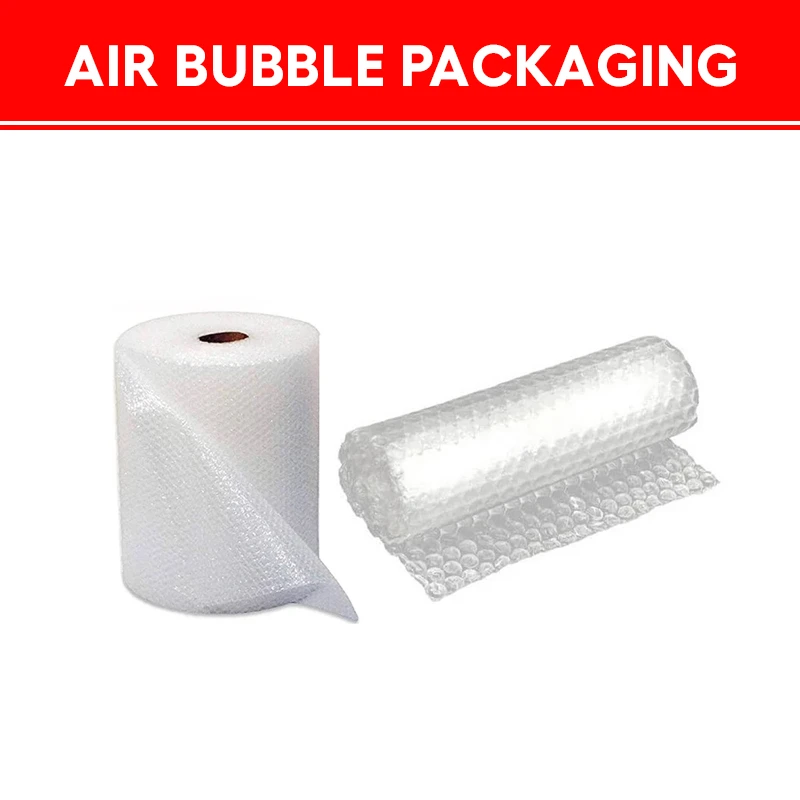
Air Bubble Packaging
Price range: $5.69 through $74.00 -
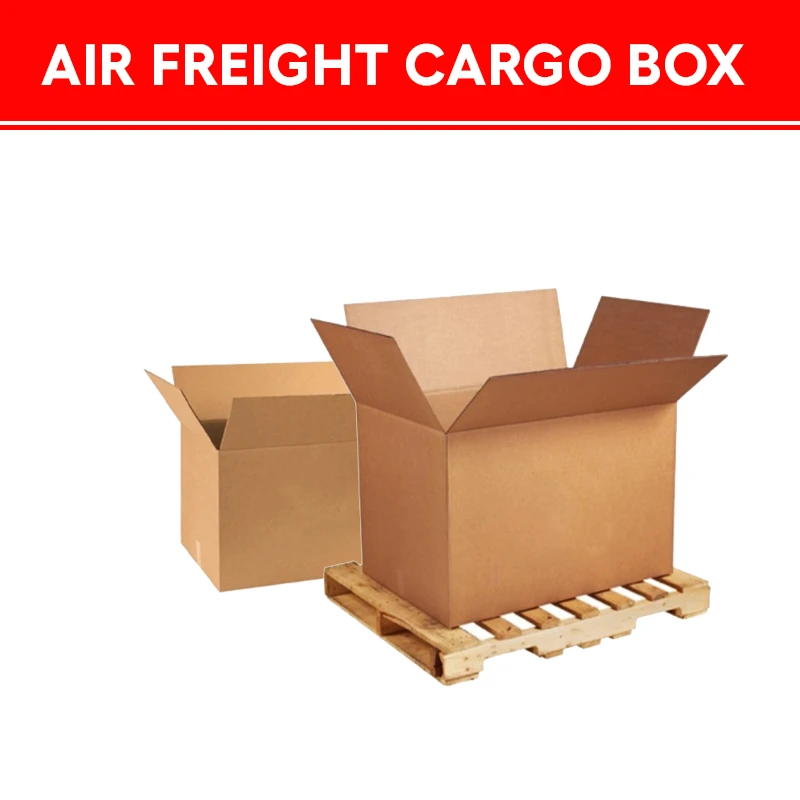
AIR FREIGHT CARGO BOXES
Price range: $14.94 through $20.82 -
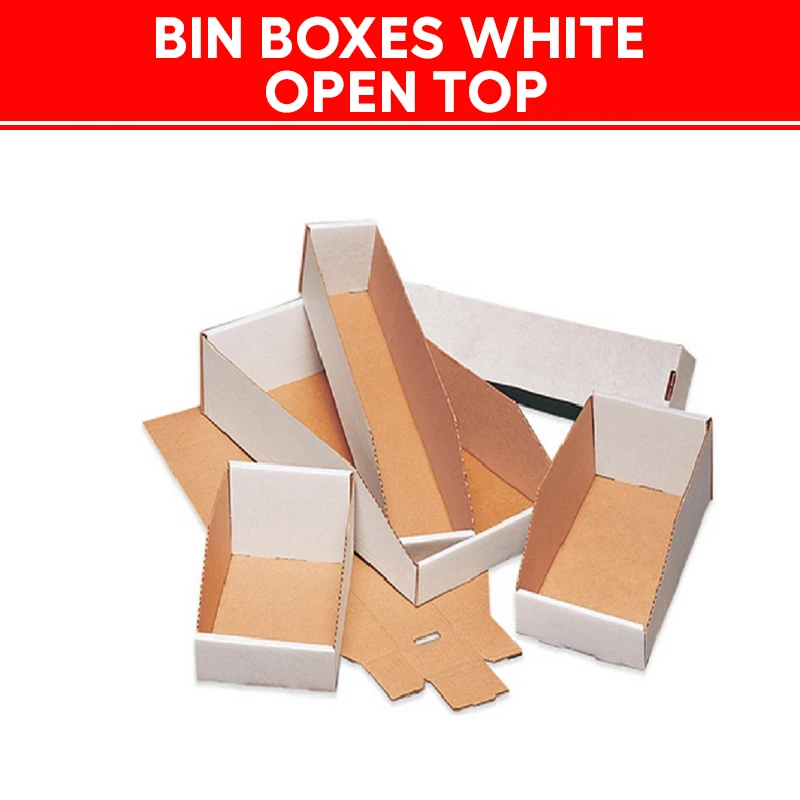
BIN BOXES – WHITE OPEN TOP
Price range: $1.32 through $2.06 -
Bubble Bag Pouches SELF SEAL
Price range: $5.50 through $179.85 -
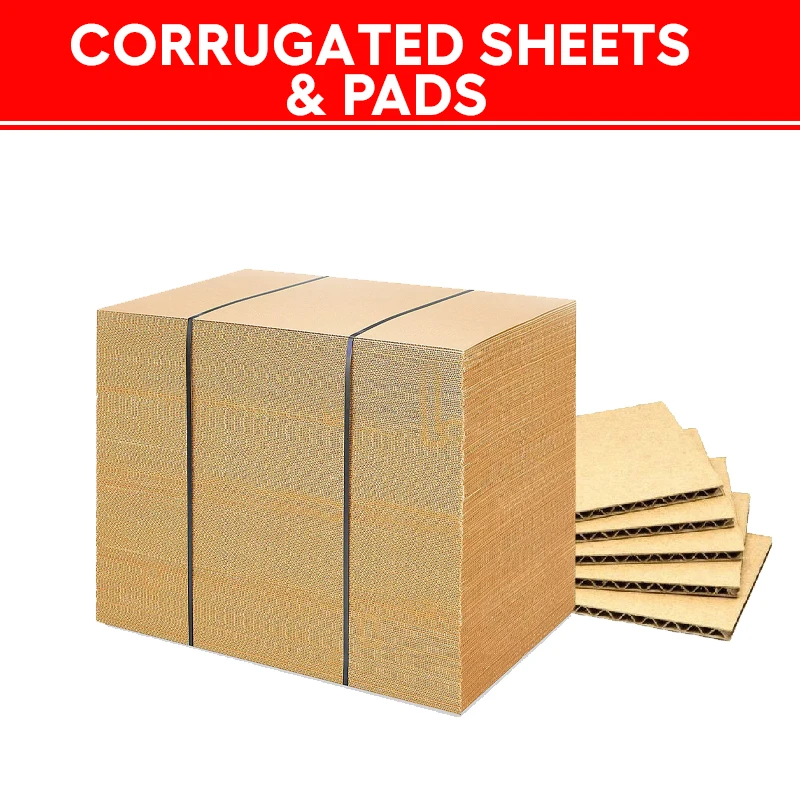
CORRUGATED SHEETS & PADS
Price range: $0.52 through $7.81
FREQUENTLY ASKED QUESTIONS
How much warehouse space do I actually need for bulk shipping box orders?
Standard corrugated boxes measure roughly 18×12×8 inches when assembled, occupying about 0.75 cubic feet each. A pallet of 80 assembled boxes occupies about 60 cubic feet. Most bulk orders of 1,000-5,000 boxes fit within a standard 10×10 storage room or warehouse section. Flat-packed (unassembled) boxes occupy roughly 50% less space. Before placing a bulk order, measure your available storage and calculate: (Order quantity) × (0.75 cubic feet) = Total space needed. If you’re tight on space, ask about flat-packed delivery from Anchor Box to cut your storage footprint in half.
What’s the actual break-even point for bulk ordering?
The break-even point depends on your specific bulk ordering costs. Simple calculation: multiply the per-box price difference by the order quantity to find how many boxes you need to use to justify the purchase. If you order 1,000 boxes at $0.20 per box (small order: $1.50 vs $1.30 for bulk), you break even at 500 boxes. If you use 500 boxes per month, you break even in month 1 and save money from then on. Use this formula: (Price difference per box) × (Order quantity) = Break-even number of boxes needed.
Can I negotiate better pricing without committing to massive bulk orders?
Absolutely. Many suppliers offer incremental discounts based on annual volume commitments rather than on the size of a single order. You might commit to purchasing 10,000 boxes annually (approximately 833 boxes per month) and receive bulk-tiered pricing, even if ordered in 1,000-unit increments. This gives you bulk discounts while keeping order sizes manageable. Anchor Box offers annual volume pricing with no minimum per-order requirement, giving you the best of both worlds.
How do I know if my business volume supports bulk ordering?
If you ship more than 100 items monthly using the same box size, bulk ordering becomes economically justified. Create a simple spreadsheet to track your monthly shipping volume over the past 3-6 months. Calculate your average. If that average exceeds 100 units, you’re ready for bulk ordering at reasonable quantities (500-1,000 units). For higher volumes (500+ units monthly), larger bulk orders (2,500-5,000 units) make financial sense.
What if my business is seasonal, with significant volume fluctuations?
Seasonal businesses should order bulk quantities during off-seasons when cash flow is available, even if they won’t use the full inventory immediately. This way, during high-demand seasons, you avoid expensive emergency orders. Alternatively, negotiate annual volume commitments with suppliers and place monthly orders in smaller quantities, qualifying for bulk rates based on committed annual volume rather than the size of each order. Anchor Box’s no minimum policy is perfect for seasonal businesses—order what you need each month without being locked into rigid minimums.